

Tank water looks clear until the lid comes off. Sediment on the floor, algae near the vent, and a layer of warm stagnant water are all invisible from the tap. A water tank cleaning checklist gives owners, facility managers, and tenants one shared list of what to inspect, what a contractor must do, and what paperwork to keep.
This guide covers the checks you can do from outside the tank, a sample checklist for the cleaning itself, a dispenser checklist for the taps people actually drink from, and what UAE authorities expect.
Why a Water Tank Cleaning Checklist Matters
Most buildings in the UAE store water in a rooftop or underground tank before it reaches the taps, so the tank is the last place water sits before people use it. Warm stored water favours bacterial growth, sediment settles on the floor, and rooftop tanks collect dust, insects, and bird droppings when lids and vents are not sealed. This matters most in buildings with many users, such as offices, hotels, and school cleaning in Sharjah sites with water stations.
A checklist keeps three things from being forgotten: the routine inspection between cleans, the cleaning and disinfection itself, and the records that prove it happened. It also helps when responsibility is split between a landlord, a property manager, and tenants.
Water Tank Hygiene Compliance in the UAE
Dubai Municipality advises that water tanks and plumbing systems be cleaned and disinfected at least every six months, using companies it has approved, and that stagnant water be drained. That is the baseline most Dubai buildings use. Other emirates have their own rules, so check with Sharjah Municipality or your local authority.
Contractor websites quote different numbers, including every six months, every three months for schools, hotels, and hospitals, and even once a year, so do not rely on one blog for your legal duty, including this one. Ask the municipality or your building management for the written requirement, and keep the contractor’s approval details, the cleaning certificate, and any water test report for every clean.
Who Is Responsible for Tank Cleaning
In a shared building, the owner or the property management company is usually responsible for the main tanks, and tenants look after dispensers and filters inside their own units. Villa owners are responsible for their own tanks. Responsibilities are set by the tenancy contract and building rules, so confirm in writing who books the clean, who pays, and who keeps the certificates.
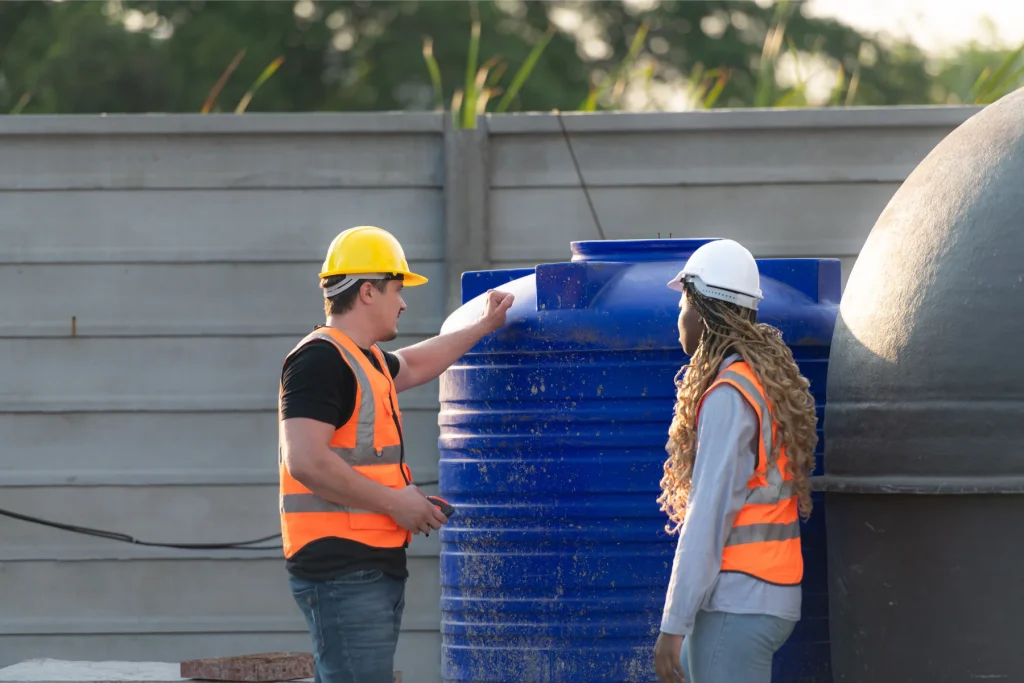
Sample Checklist for Cleaning of Water Tank
This sample follows the order a municipality approved contractor works in. Use it to confirm each step happened, not to clean the tank yourself.
Before the Cleaning
Confirm the contractor’s approval and permit number, agree the date, and tell occupants that water will be off. Arrange alternative water for the duration. Check that the contractor has a written method statement and confined space safety arrangements, because entering a tank without them is dangerous. Note the tank capacity, location, and material, and photograph the lid, vents, and overflow before work starts.
During the Cleaning
The tank is isolated and drained, sediment and sludge are removed, and the walls, floor, and roof are scrubbed and rinsed. A disinfectant approved for drinking water is applied for the required contact time, then flushed out until no residue remains. Check that the valves, float valve, overflow, ladder, and lid seals are inspected, and that damage such as cracks, corrosion, or leaks is reported to you.
After the Cleaning
The tank is refilled and the water is tested before drinking use. Chlorine residual, clarity, taste, and odour are checked, and many contractors also provide a microbiological result. Taps are flushed, the supply is restored, and you receive the certificate, the test report, and the date the next clean is due. File everything and set a reminder.
Free Monthly Water Tank Inspection Checklist PDF
Download your free monthly water tank inspection checklist PDF. Check the lid, vents, water quality, leaks, and surrounding area each month with a structured, easy to follow task list.
Download Monthly Water Tank Inspection Checklist PDFFree to print and share with your team. No sign up required.
Drinking Water Tank Cleaning Checklist for Routine Inspections
Between professional cleans, a monthly walk round catches problems early, and none of it needs anyone to enter the tank. This drinking water tank cleaning checklist covers what to look at from the roof and the outside.
Check that the lid is closed, locked, and undamaged, and that vent and overflow screens are intact so insects and birds cannot get in. Look for cracks, rust, damp patches, and leaks around the tank, and keep the ladder and surrounding area clean and clear. Make sure sunlight cannot reach the water, since light encourages algae. Note any change in colour, smell, or taste at the taps, and check that the float valve is not letting the tank overflow or run dry. Write the date and your initials in a log so patterns show up, and call the contractor early if anything looks wrong.
Free Water Tank Cleaning Contractor Checklist PDF
Download your free water tank cleaning contractor checklist PDF. Check the contractor’s credentials, method, safety steps, and final tank condition with a structured, easy to follow task list before you sign off the job.
Download Water Tank Cleaning Contractor Checklist PDFFree to print and share with your team. No sign up required.
Rooftop and Underground Tanks: What Changes
Rooftop tanks face heat and sun, which warms the water and encourages algae if light gets in, and they are exposed to dust, birds, and insects, so lids, vents, and screens matter most. Underground tanks are more exposed to flooding, ground moisture, and access covers that do not seal, so check the covers, the pump room, and any damp. Keep drinking water tanks clearly separate from tanks used for flushing or firefighting, and label each one so the wrong tank is never cleaned or tested.
Water Dispenser Cleaning Checklist
The tank is only part of the journey, because people drink from dispensers and coolers. A water dispenser cleaning checklist works best on a simple schedule: wipe the nozzle and drip tray daily, wash the drip tray and wipe the exterior weekly, and sanitise the reservoir, taps, and removable parts every one to three months or as the maker advises, rinsing until no taste of cleaner remains. Replace filters on schedule, and drain and refresh the unit after a long closure. For the rest of the room, see our office pantry cleaning routine.
Free Water Dispenser and Cooler Cleaning Log PDF
Download your free water dispenser and cooler cleaning log PDF. Record each clean, sanitise, and filter change for your water dispensers and coolers with a structured, easy to follow log sheet.
Download Water Dispenser and Cooler Cleaning Log PDFFree to print and share with your team. No sign up required.
Water Cooler Cleaning Checklist Format
A simple format keeps the cooler log consistent. Print it, tick it, and keep it next to the unit.
| Task | How often | Done | Initials |
| Wipe nozzle and drip tray | Daily | ||
| Wash drip tray and wipe exterior | Weekly | ||
| Sanitise reservoir and taps | Every 1 to 3 months | ||
| Replace filter | As the maker advises |
Water Storage Cleaning and Water Purification Cleaning
Water storage cleaning covers the tank itself. Water purification cleaning covers the equipment after it, such as filters, UV units, and reverse osmosis systems, which need their own filter changes and cleaning to stay effective. A clean tank feeding a neglected filter still delivers poor water, so schedule both together and record the dates in the same log.
How Often Should a Water Tank Be Cleaned in the UAE
Short answer: at least every six months, according to Dubai Municipality’s advice, and sooner after a leak, flooding, a long period of disuse, or any change in the water’s colour or smell. Inspect the tank monthly between cleans.
Common Tank Cleaning Mistakes
The usual gaps are entering a tank without confined space safety, using household chemicals that are not approved for drinking water, skipping the flush or the water test, cleaning the tank but ignoring the dispensers and filters, leaving lids unsealed, and losing the certificate. Another is treating a tank cleaning checklist as paperwork only, when the monthly inspection is what catches problems between cleans.
Choosing a Water Tank Cleaning Contractor
Ask for the municipality approval and permit number, a method statement, trained and equipped staff, the disinfectant used, and a sample certificate and test report. A good certificate shows the date, the tank location and capacity, the contractor’s approval number, the method used, the water test results, and a signature. Our Dubai services page lists water tank cleaning in Dubai, and the same questions apply to every provider, including us.
Conclusion
A water tank cleaning checklist turns a hidden, easily ignored job into a routine with clear checks, a six month cleaning cycle, and records you can show. Inspect monthly, use an approved contractor for the cleaning, keep the certificate and test results, and treat dispensers and coolers as part of the same system. If you want help with the pantry and building hygiene around your tank, ask for a building hygiene quote or call +971 52 136 9524.
FAQs
What should a water tank cleaning checklist cover?
Routine monthly checks, the contractor’s approval details, the cleaning and disinfection steps, a water test afterwards, the certificate, and a reminder for the next clean.
What is the recommended cleaning interval for water tanks in Dubai?
Dubai Municipality advises at least every six months using approved companies. Other emirates have their own rules, and any leak, flooding, or change in water colour or smell calls for an earlier clean.
Can I clean my water tank myself?
It is not recommended for building tanks. Entering a tank is a confined space hazard, drinking water disinfection needs approved products, and a DIY clean produces no certificate. Wiping dispensers and checking lids is fine.
How do I know a tank cleaning company is approved?
Ask for the municipality permit number and a sample certificate, then confirm the approval with the municipality or your building management before work starts.
Who is responsible for cleaning the water tank in a building?
Usually the owner or property management company for shared tanks, and tenants for dispensers inside their own units. Confirm it in the tenancy contract or building rules.
What are the signs a water tank needs cleaning?
A change in colour, smell, or taste, visible sediment or algae, insects near the vents, a damaged lid, or a leak. A due date older than six months is also a sign.
How often should a water dispenser be cleaned?
Daily for the nozzle and drip tray, weekly for a wash of the tray, and every one to three months for sanitising the reservoir and taps, or whatever the maker’s guide says.
What is a water cooler cleaning checklist format?
A table with the task, how often, a done box, and initials, plus the date and next due date. Keep it beside the unit and review it monthly.
What happens after a water tank is cleaned?
Once the water has been tested and the taps flushed, the owner should be handed the certificate, the results, and a date for the next clean.


